

Last Updated on June 24, 2025 by Pilates Power
The Benefits of Fascia Release in Pilates
‘Pilates is not just exercise it’s a lifestyle that changes the world’
Brent Anderson, founder of Polestar Pilates
Pilates builds the strength that helps you move safer and more effectively.
At our Pilates Power Studio in Holywood, Belfast ( right next to the Coffee Yard!) we teach the Pilates Method through PoleStar. Senior Instructor Emily Waters was trained by the founders of the method in Sydney, Australia where she opened her first successful Pilates Power studio in Cronulla. Since then Emily has taught Pilates and worked with people on their mobility and flexibility with great care and attention across Europe, the Caribbean, Ireland and the United Kingdom.
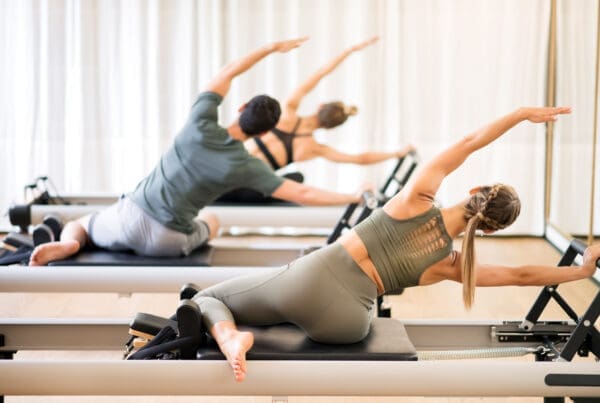
Attending regular Pilates classes promises to improve flexibility, builds strength and develops control, balance and endurance in the entire body. It puts emphasis on alignment, breathing, developing a strong core, improving coordination and balance. In this article we will discuss the benefits of fascia release in Pilates
Fascia release, often referred to as myofascial release, is a manual therapy technique aimed at relieving tension in the fascia, the connective tissue that surrounds muscles, bones, and organs. Here are the key benefits:
- Pain Reduction
Alleviates chronic pain (e.g., lower back, neck, shoulder)
Reduces tension headaches
Eases muscle soreness post-exercise or from overuse
- Improved Flexibility and Mobility
Releases restricted fascia, increasing range of motion
Enhances muscle performance and coordination
Helps in rehabilitation after injury or surgery
- Better Posture and Alignment
Corrects imbalances in muscle tension
Supports more natural spinal alignment
Reduces strain on joints and ligaments
- Boosted Circulation and Lymphatic Flow
Enhances blood flow to muscles and fascia
Promotes lymphatic drainage, helping with inflammation and detox
- Stress and Tension Relief
Activates the parasympathetic nervous system (rest-and-digest mode)
Reduces emotional stress stored in the body
Improves overall sense of relaxation and well-being
- Injury Prevention
Keeps fascia and muscles supple
Reduces risk of strains and overuse injuries
Helps correct compensatory movement patterns